 Delegation
Delegate the Outcome, Not the Task
Is the team underperforming — or is management under-communicating?
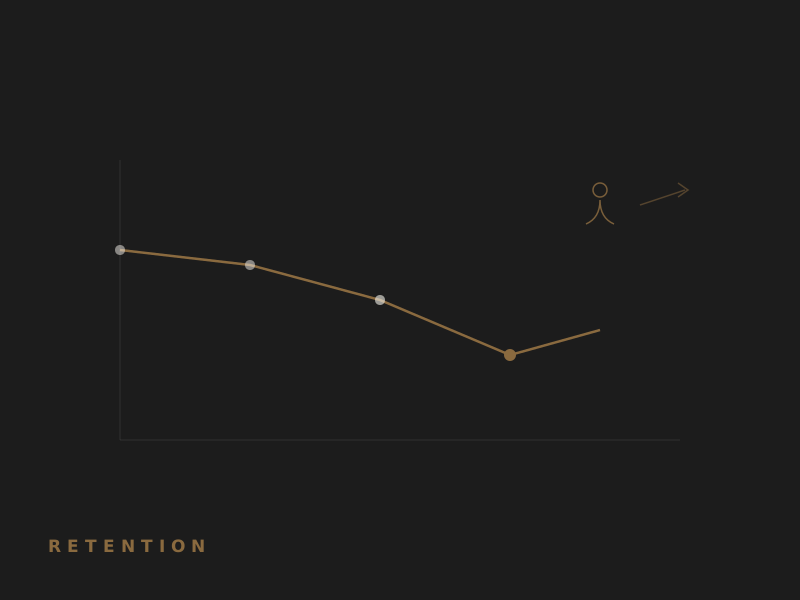
Ask most business owners why a good employee left, and you'll hear the same answer. "They got a better offer." "It was about money." It feels true. It's also, most of the time, wrong.
People rarely leave a job they love over a small pay gap. They leave a manager, a pattern, or a feeling that things will never change. The pay raise is just the push that makes the door easy to walk through. If you want to keep your best people, you have to look at what really drives them out.
When we sit down with teams, the same few reasons come up again and again. They are simple. They are also easy to miss when you're busy running the business.
The first is a bad manager. Not a cruel one — just one who avoids hard conversations, plays favourites, or never gives clear feedback. People can handle a tough job. What they can't handle is a boss who makes the job harder than it needs to be.
The second is feeling stuck. Your best people want to grow. If they can't see a path forward, they start looking for one somewhere else. The third is feeling unseen. When good work goes unnoticed for long enough, even loyal people stop trying.
People don't leave jobs. They leave the gap between what they were promised and what they live each day.
When a good person leaves, the cost is bigger than one salary. You lose their skill. You lose what they knew about your business. The team that stays has to cover the gap, so they get tired and stretched. Then you spend weeks hiring and training someone new — who takes months to reach the same level.
And here's the part that hurts most. The people who leave first are often your best ones. They have the most options. So high turnover doesn't just cost you bodies. It slowly drains the talent that made you strong.
The fix is not a fruit basket or a once-a-year bonus. It starts with the managers. A manager who can give honest feedback, handle conflict early, and make people feel seen will hold a team together far better than any perk.
That's a skill. And like any skill, it can be built. Most managers were promoted because they were good at the work — not because they were trained to lead people. Close that gap, and the door your good people keep eyeing starts to stay shut.
If staff turnover is the thing keeping you up at night, the first step is simple. Find out, exactly, where the gap sits in your business and why. That's where every honest conversation we have begins.
Delegation
Is the team underperforming — or is management under-communicating?
 Self-Leadership
Promoting on technical skill alone creates a predictable leadership gap.
No obligation. No generic proposal. Just a direct diagnostic discussion about what's actually happening in your business.
Take the DiagnosticQuick Diagnostic Enquiry