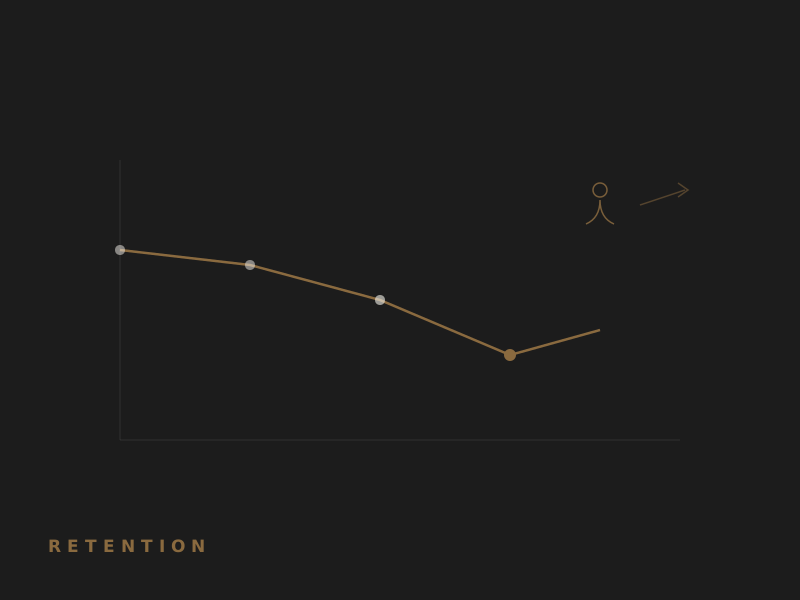
 Retention
Why Good Employees Leave (And How to Keep Them)
High staff turnover is rarely about pay. Here's what really drives good people out.

It happens in almost every operation we look at. The person promoted to team leader, shift supervisor, or floor manager is rarely chosen for their leadership ability. They're chosen because they're good at the job itself — they know the line, the numbers, the process, inside out. On paper, it makes complete sense.
Then the title changes, and nothing else does. The same person who could troubleshoot a machine fault in minutes now has to manage a personality conflict between two operators, hold someone accountable for repeated lateness, or deliver a difficult message from senior management to a team that doesn't want to hear it. None of that was in the job description they were promoted from.
Most businesses don't see this as a leadership gap. They see it as a performance problem, an attitude problem, or "just how he is." So they either ignore it, send the person on a generic two-day course, or quietly work around them. None of those things touch the actual issue.
The technical skill that earned the promotion has nothing to do with the skill the promotion now requires.
This is where self-leadership comes in, and it's the part most training misses entirely. Before someone can lead a team through tension, conflict, or change, they need a baseline ability to manage their own reactions, hold their own standards, and have an uncomfortable conversation without either avoiding it or turning it into a fight. That's not a soft skill. It's the foundation everything else sits on.
The cost shows up in places that are hard to put on a spreadsheet directly: the good people who leave because their manager never addresses the one person dragging the team down; the small issues that get escalated to the owner's desk because the manager doesn't feel equipped to handle them; the culture that slowly shifts from "we sort things out" to "we put up with things." None of it shows up as a single line item. All of it shows up in the numbers eventually.
The fix isn't another generic leadership course. It's identifying, specifically, where this gap shows up in your business, for which managers, and why, and then building the capability from there. That's the starting point of every engagement we run.
Retention
High staff turnover is rarely about pay. Here's what really drives good people out.
 Delegation
Is the team underperforming — or is management under-communicating?
No obligation. No generic proposal. Just a direct diagnostic discussion about what's actually happening in your business.
Take the DiagnosticQuick Diagnostic Enquiry